Author Archives: dbarker

Getting out the Keelson from White Oak stock

5/4 x 13″ x 12′ white oak. I have five of these that came out of one log, four of them perfectly clear and one with a small tight knot. They came off the bandsaw mill in Delaware that I was operating with my friend Phil. Air drying since 2022.

My keelson is 4″ wide by 3″ deep. I will get what I need out of two boards. I will plane them to 3/4″ then laminate them in place over the molds to assemble the keelson.
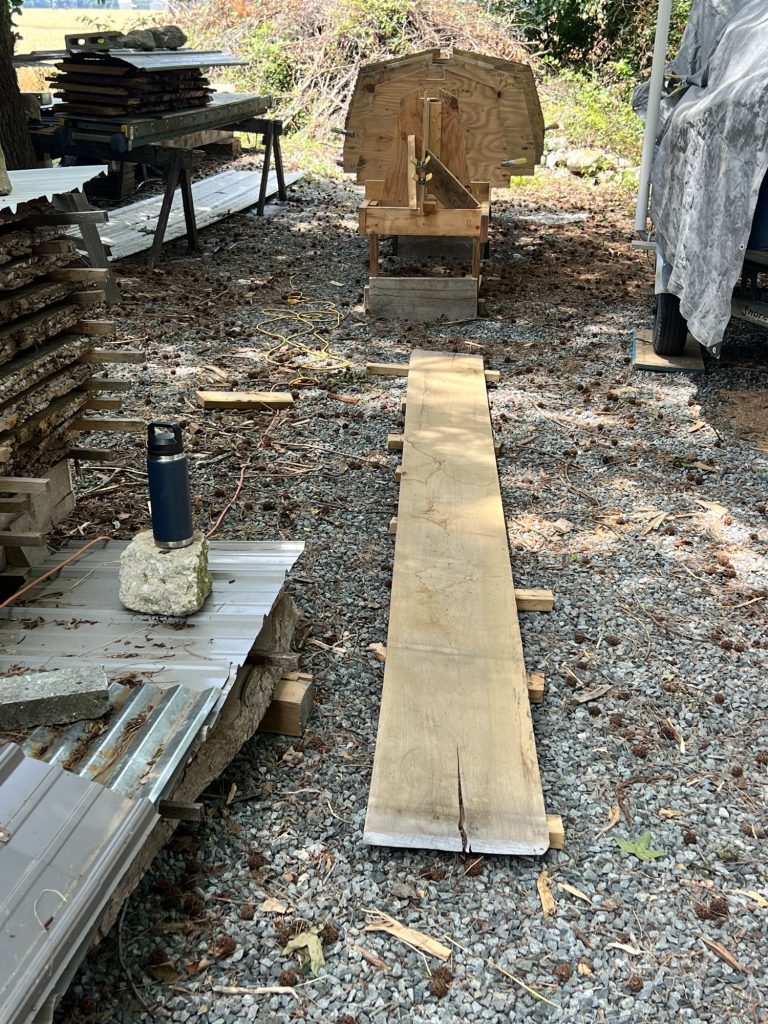
I needed to cut a straight edge into these boards that have irregular edges. I used thin tongue and groove plank as a guide for my circular saw. This plank is some kind of manufactured material, basically wood but assembled in a way that eliminates the idiosyncrasies of wood. They are perfectly straight. I checked them with a string line. 
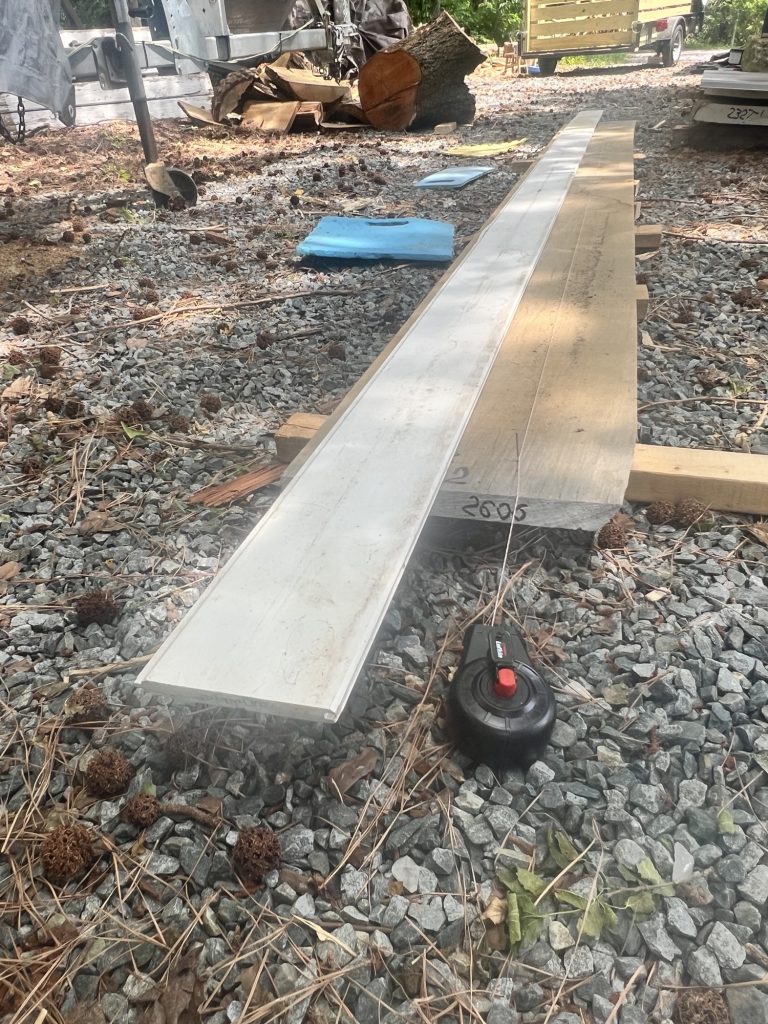
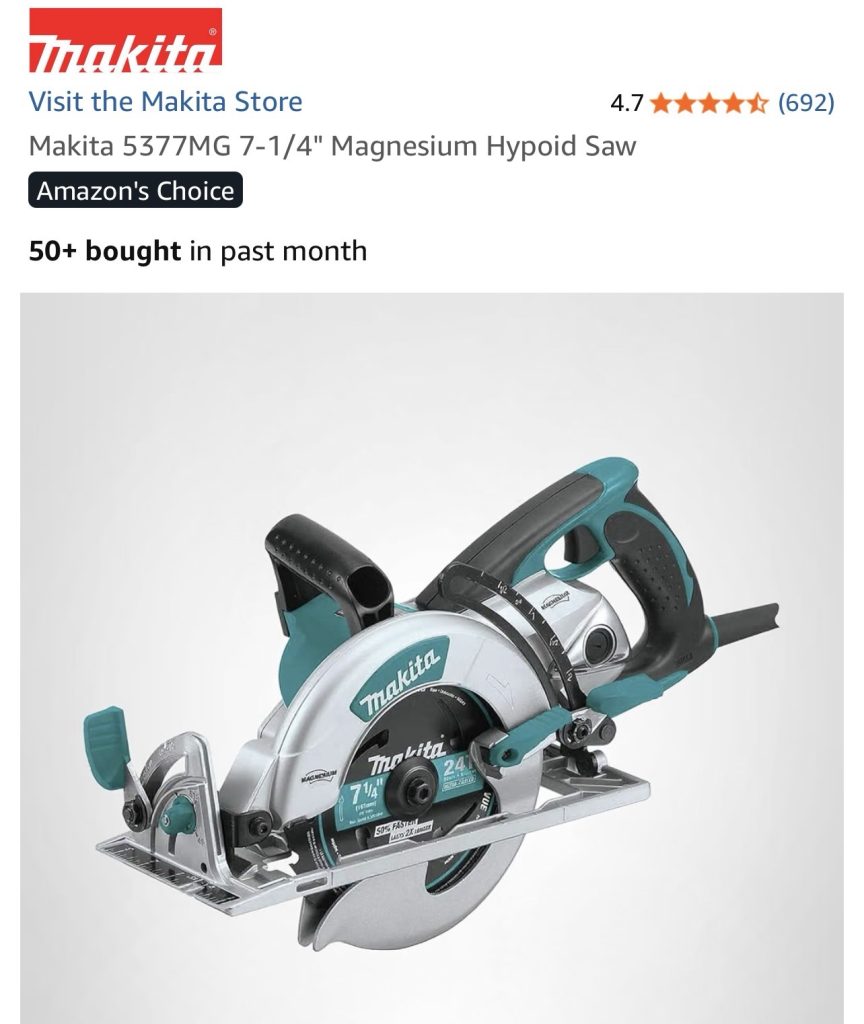
My Makita circular saw is a superb instrument. Heavy. Long base plate. Heavy, accurate connections and hardware between the base plate and the motor, and to raise and lower the base plate. The base plate stays square to the blade at any depth No security button on the handle that you have to squeeze in order to start it. Adult use only.
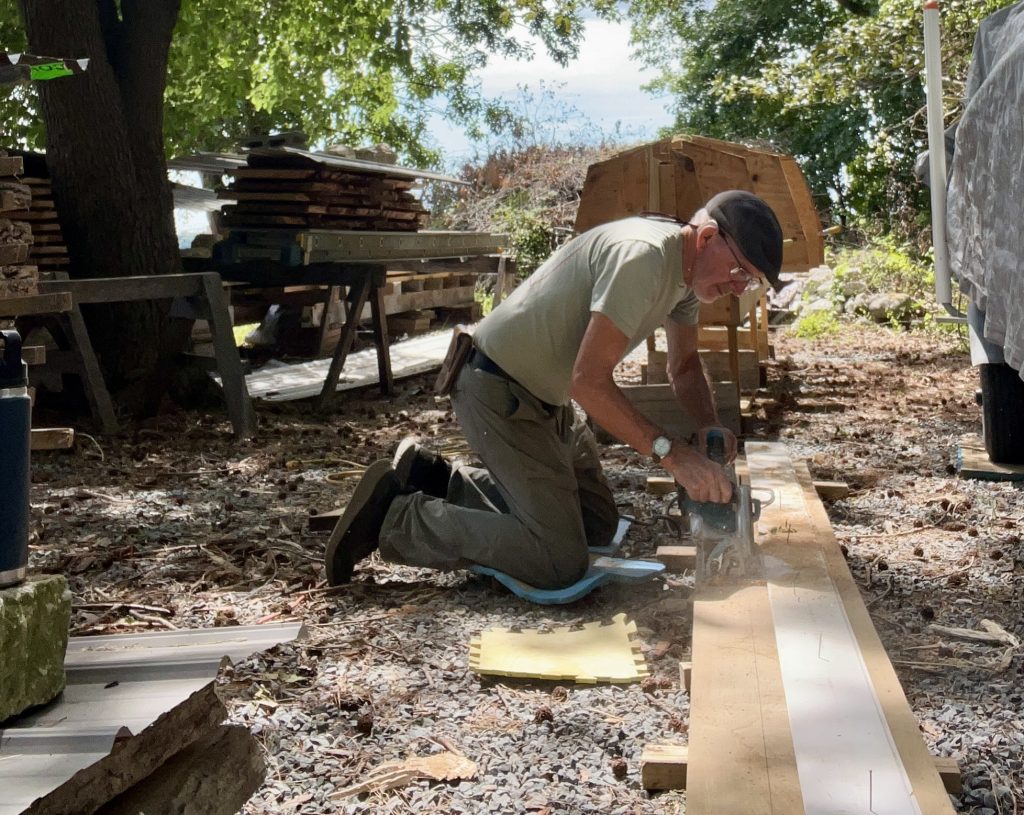
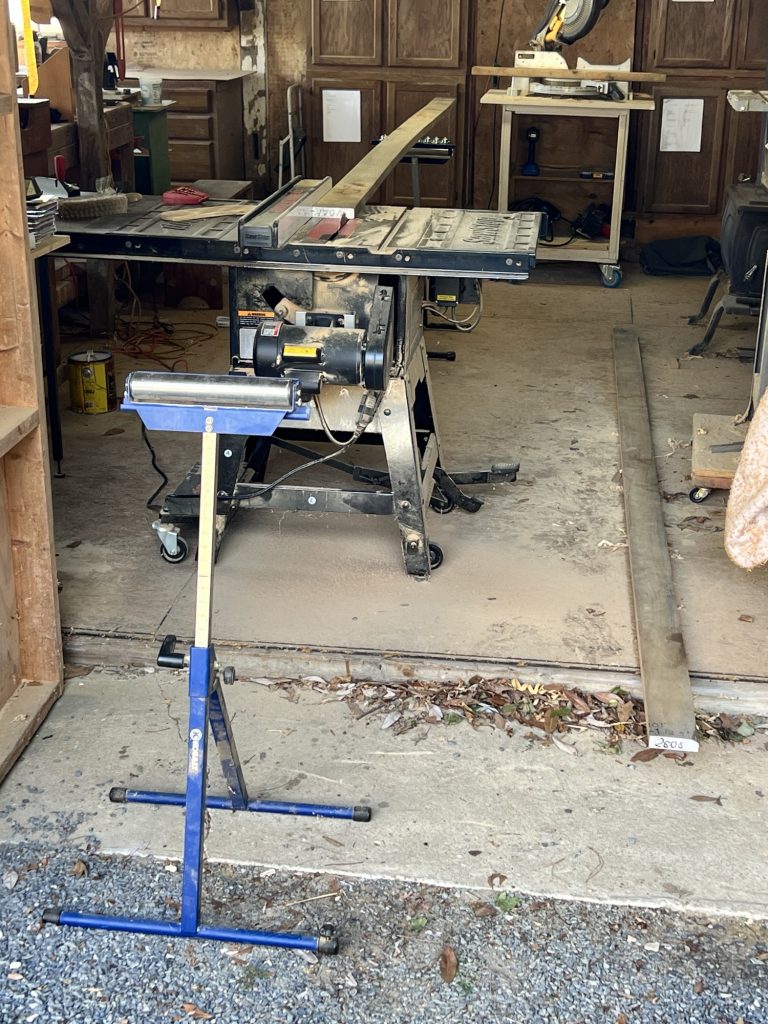
With one straight edge, nearly perfect, I ripped 4-1/8 inch planks with the table saw, cut proud for final planing and fitting. 
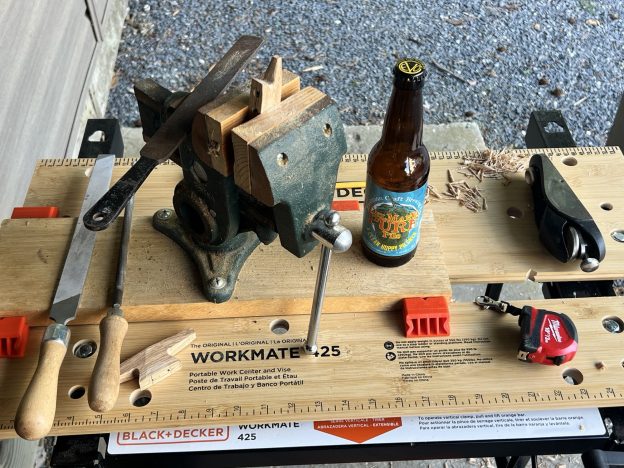
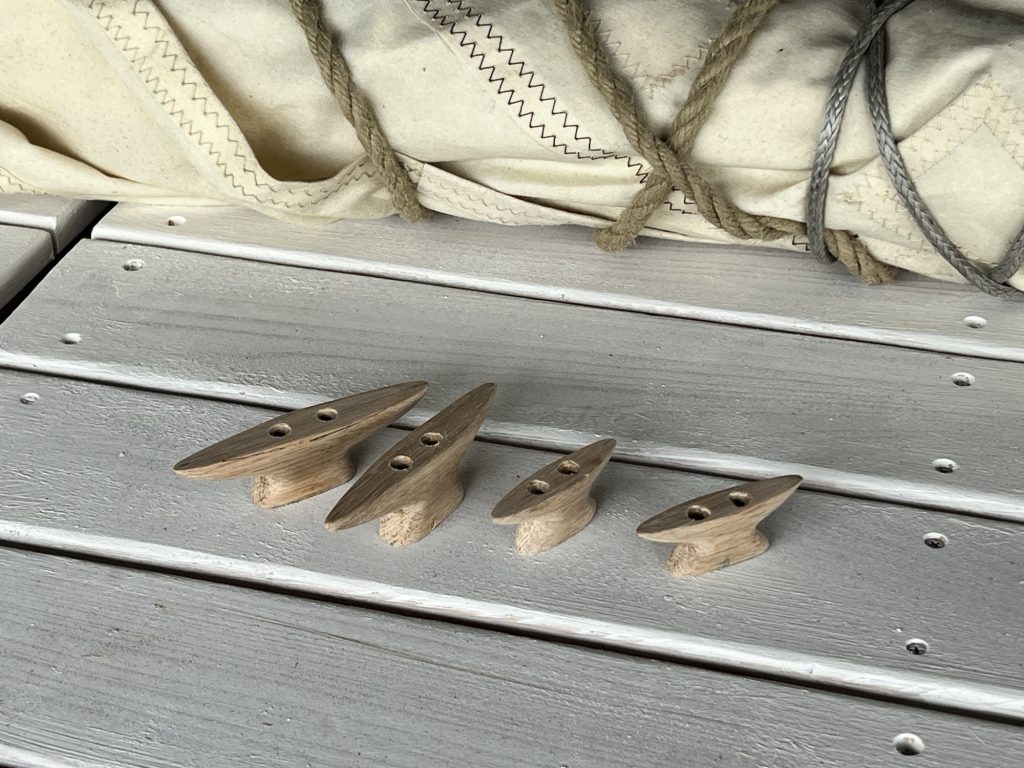
Cleats for Cinnamon Girl. New skill for me.

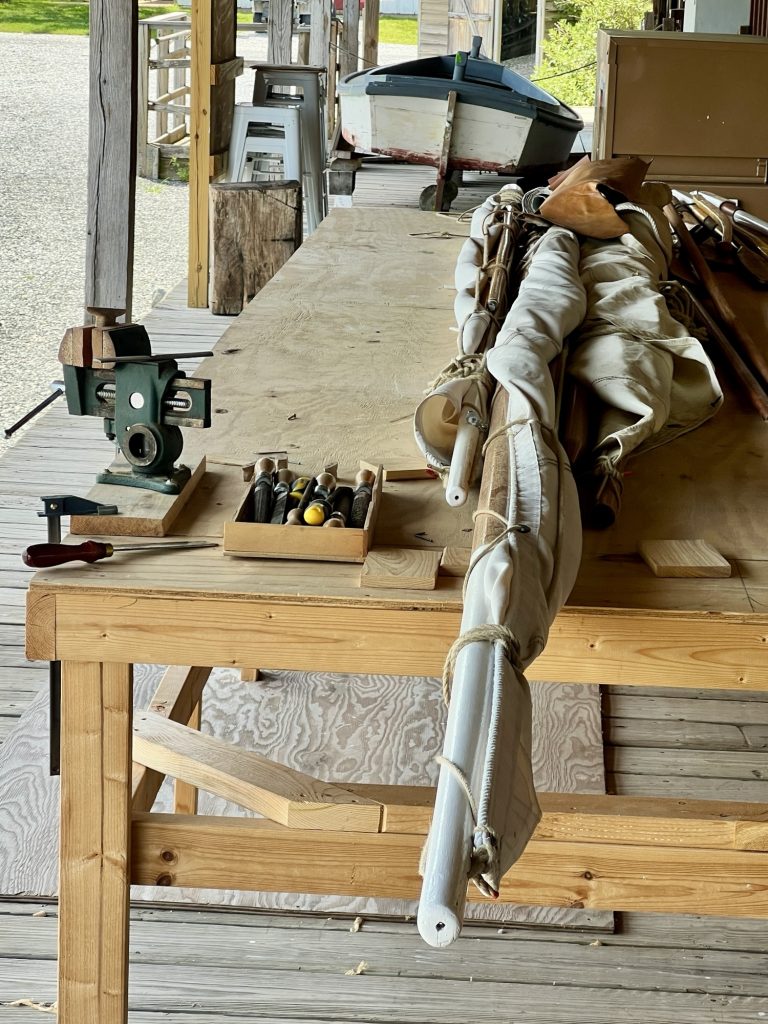
I volunteer with the small boat conservation team at the Chesapeake Bay Maritime Museum in St. Michael’s. Every Tuesday we scrape, paint, clean, repair, outfit, and float traditional small craft. We’re putting the final touches on Cinnamon Girl, a two-sail crabbing bateau built by Kevin Brennan in 1993. I was assigned to fashion cleats for her spars.

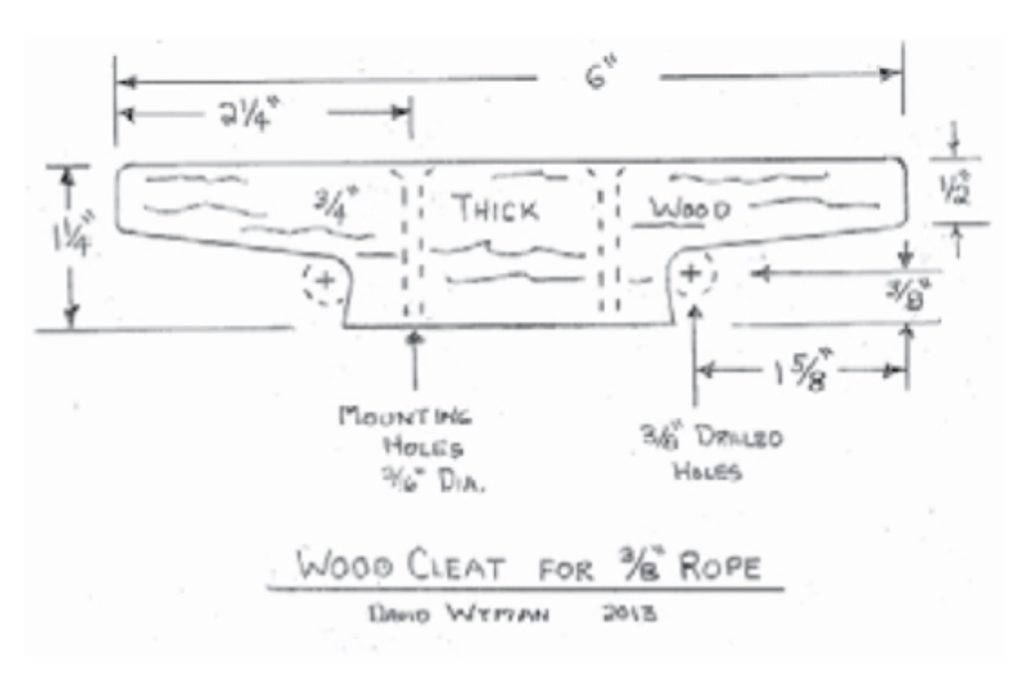
I found an article on making cleats in the Summer 2013 issue of TSCA’s Ash Breeze magazine, here.

My sequence was:

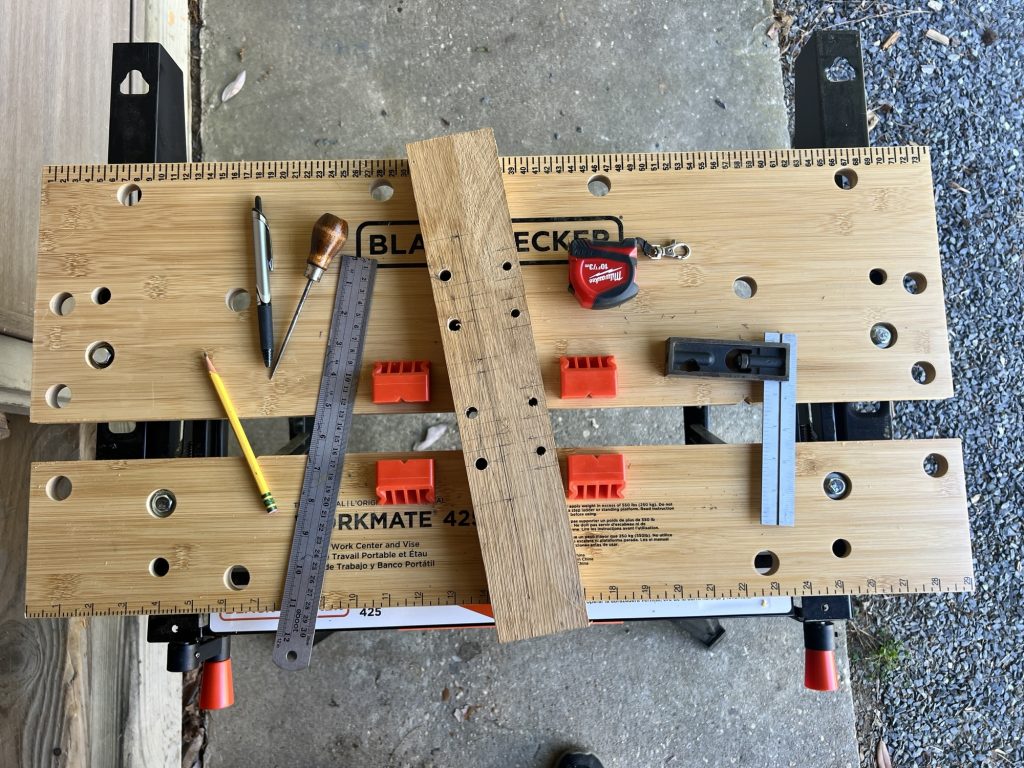
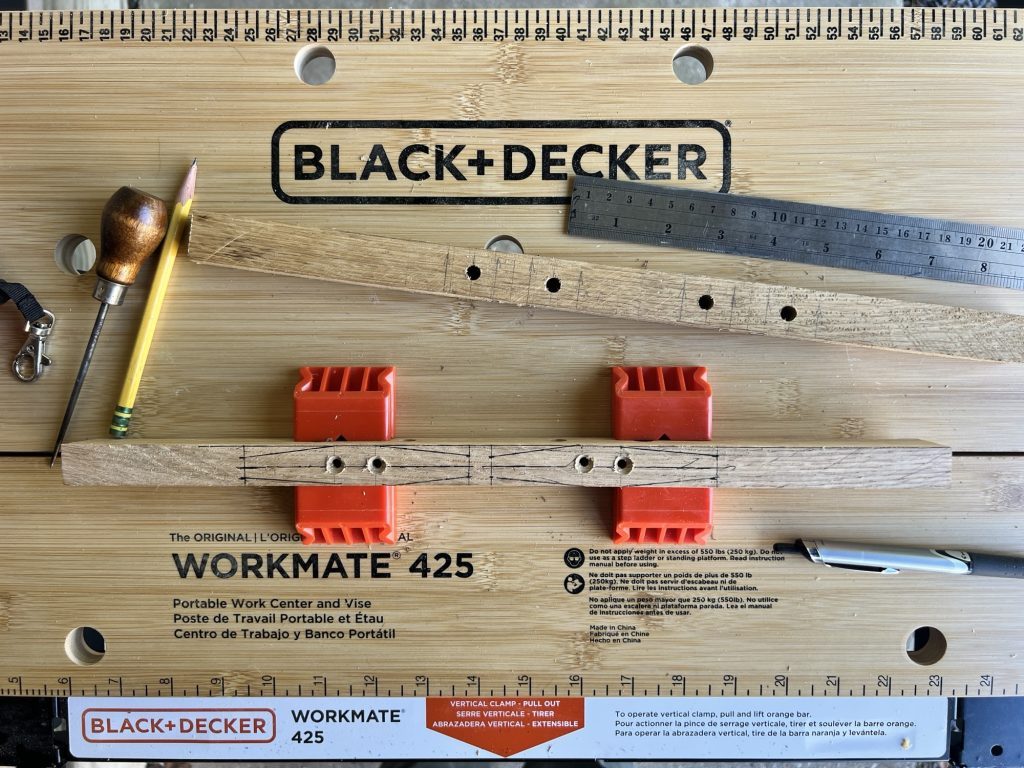
  • Mark the positions of holes that will guide the right curve shown above.
  • Mark layout lines based on the positions of those holes.
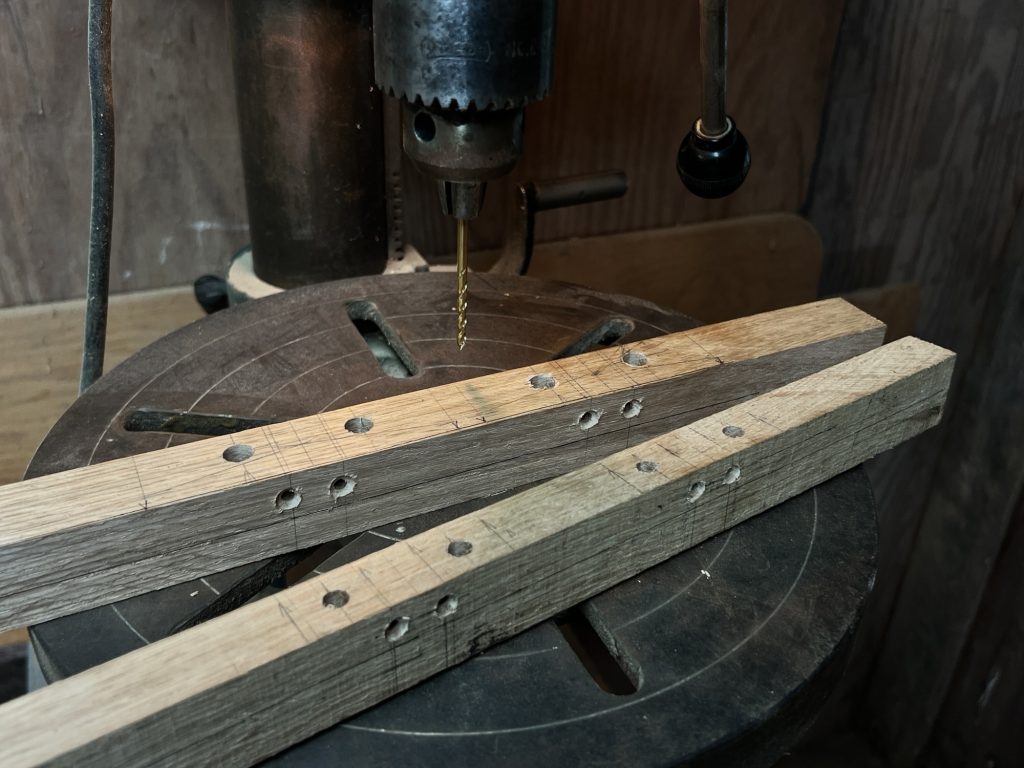
  • Drill the guide holes.
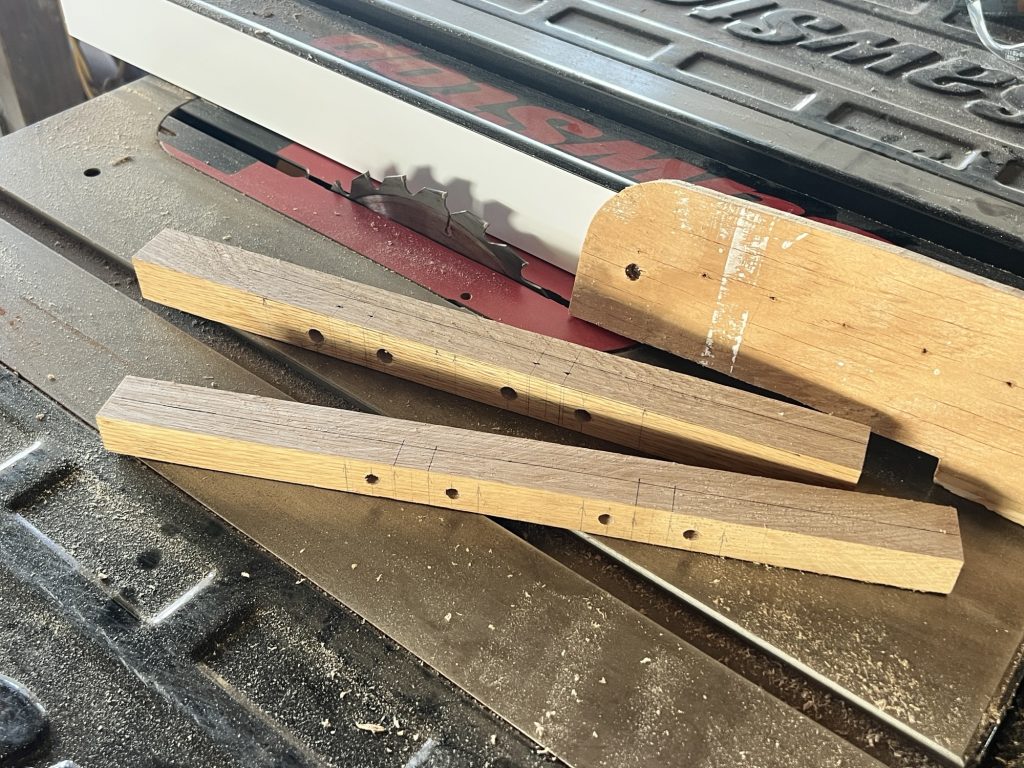
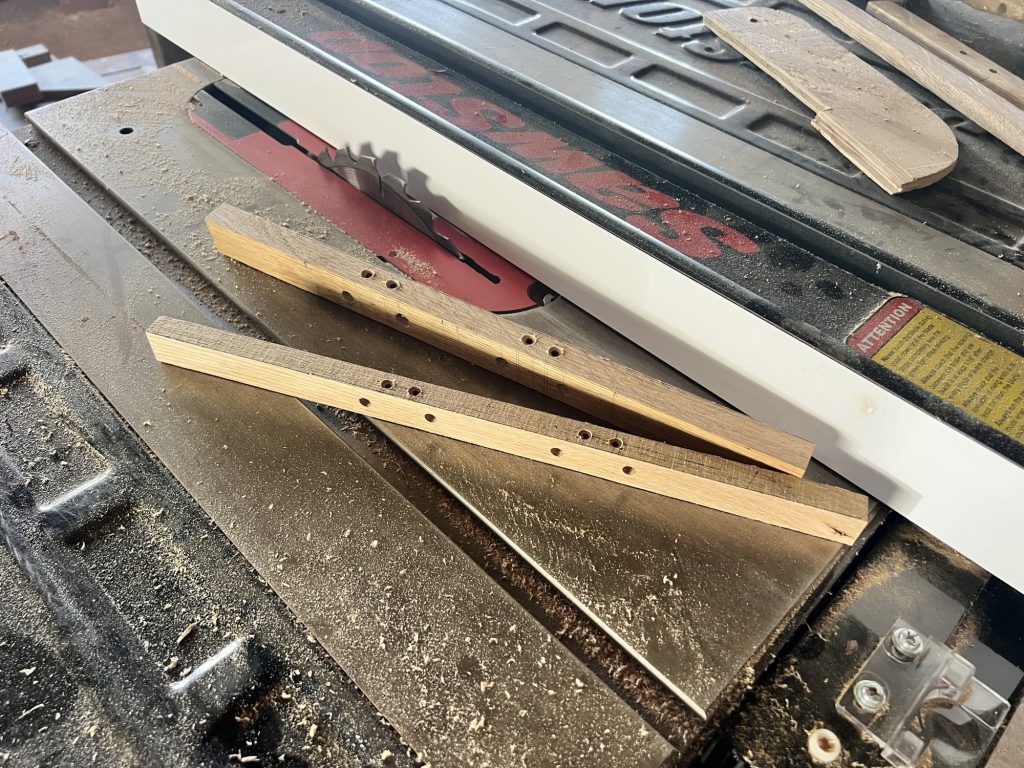
  • Rip the stock to separate the pairs of cleats.
  • Drill the holes for the mounting screws.
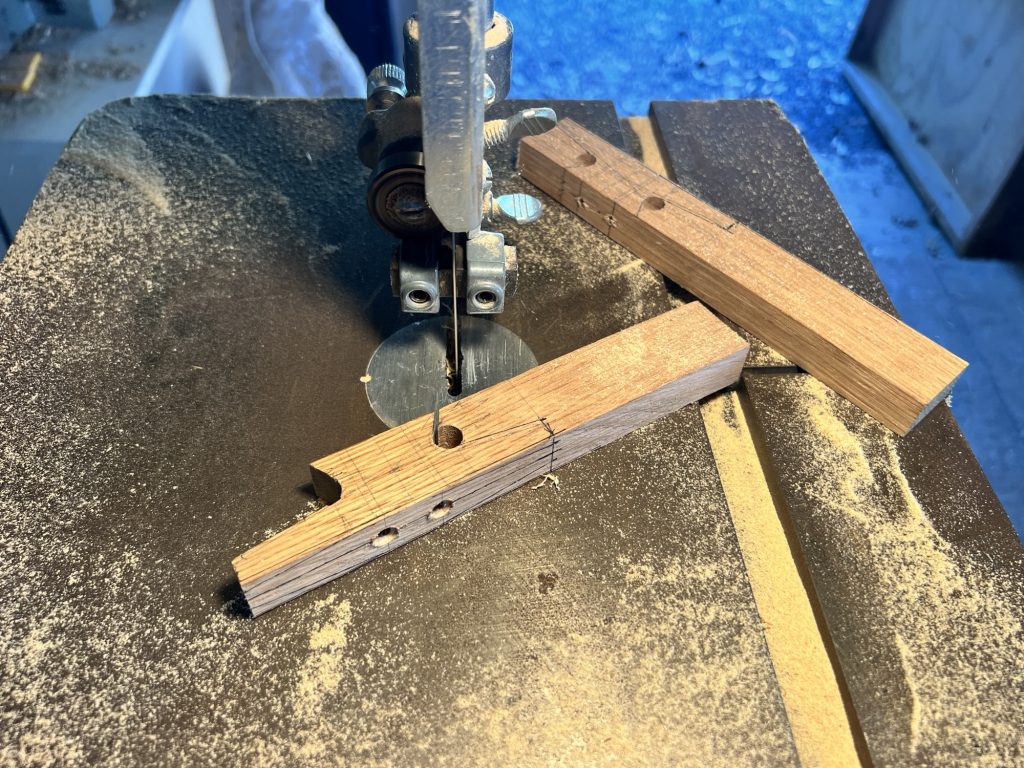
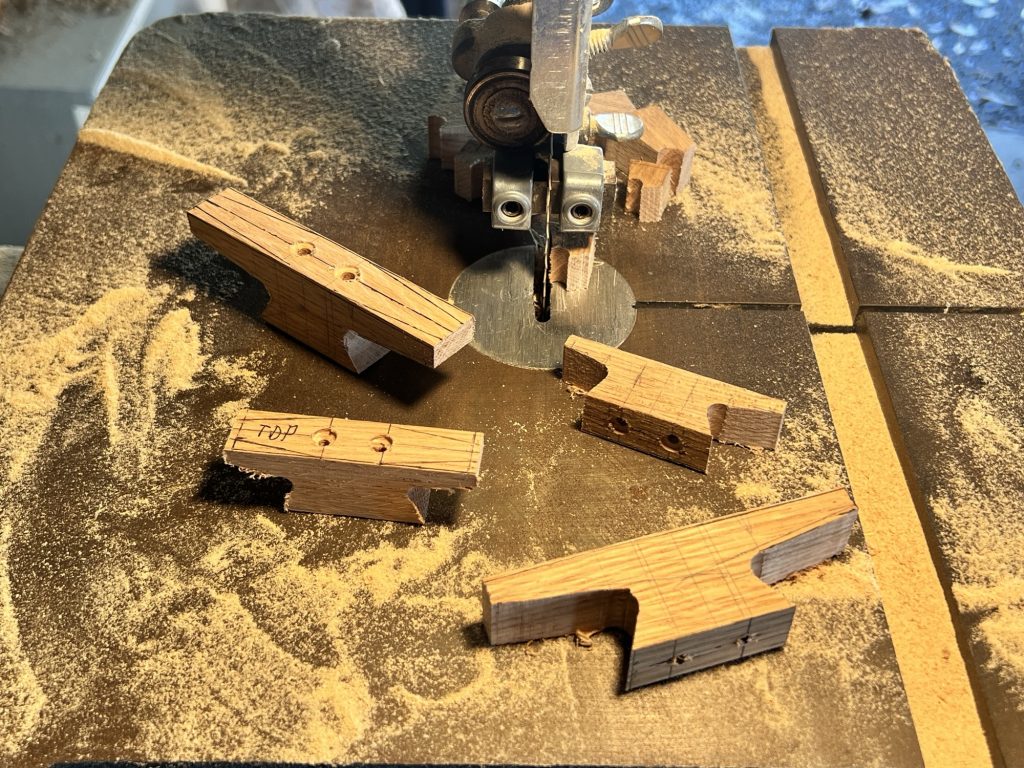
  • Cut lines on the backsaw.
  • Shape with block plane and rasps
  • Sand smooth.

Will I make cleats for my two-sail bateau? Or buy them? At the start of this project, I was thinking it is not worth the trouble. But as I finish up, and I have picked up a new skill and feel more confident, I feel like I will fashion cleats for my own boat also.

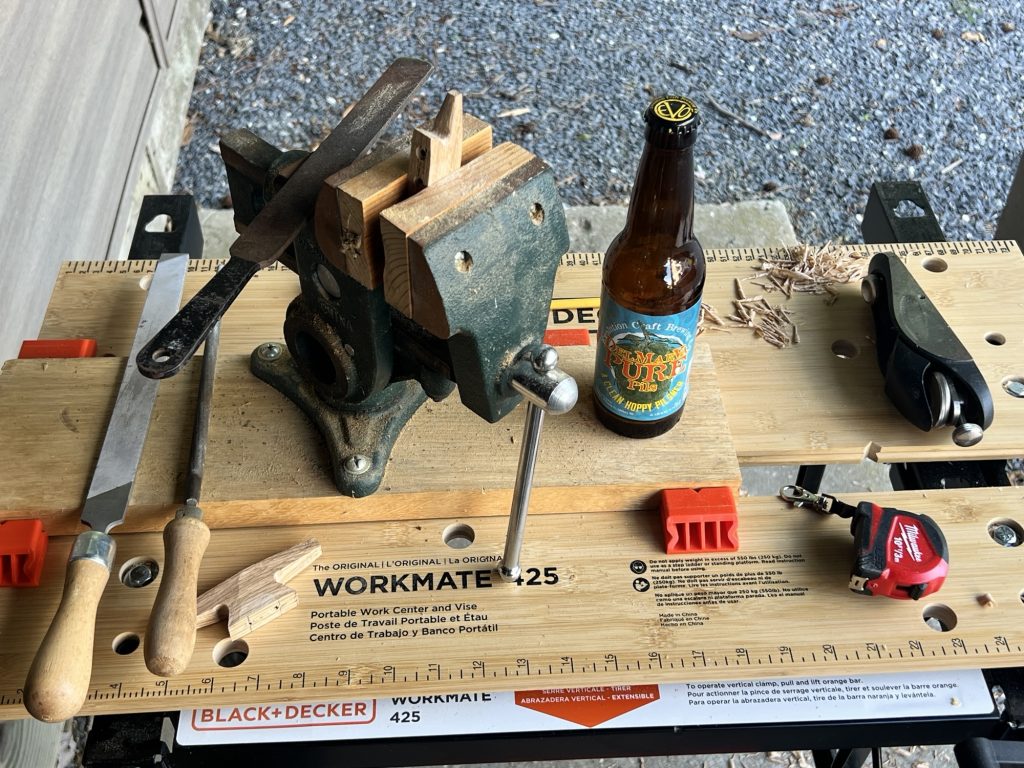
Working on these at home between my Tuesday shipyard workdays.

Finishing up at the CBMM shipyard.

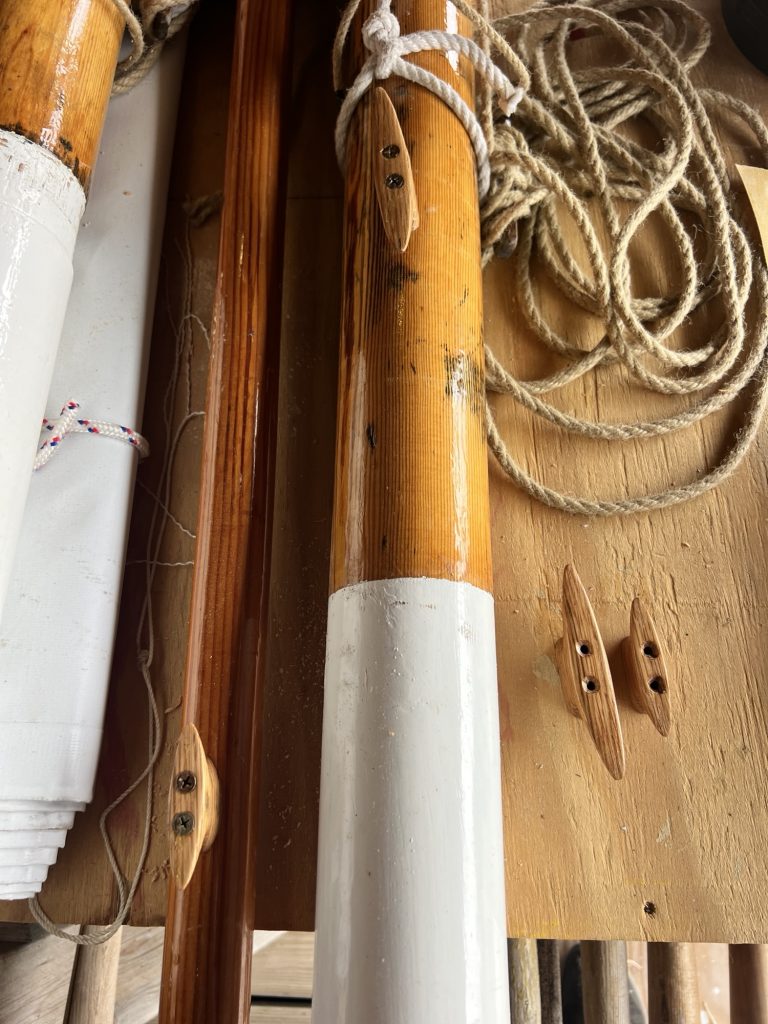
Small cleat onto the sprit on the left, to secure the snotter. Large cleat on the mast on the right, to secure the halyard.